

The Sustainability Impact of Smart Access Control Systems
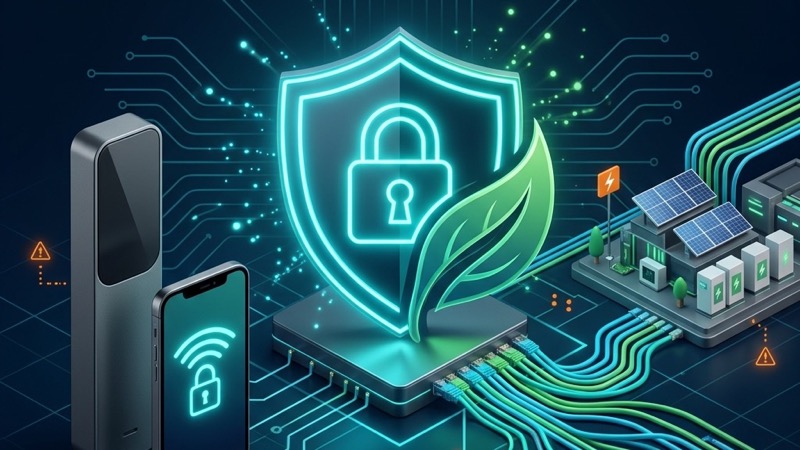
Modern enterprise security is undergoing a seismic shift: physical access control is no longer merely a defensive perimeter but a pivotal lever for hitting Environmental, Social, and Governance (ESG) targets. For decades, security infrastructure languished in a technological silo, defined by energy-hungry hardware and staggering mountains of non-recyclable plastic waste. However, as organizations aggressively pursue net-zero goals, the sustainability impact of smart access control systems has moved to the absolute forefront of the facility management conversation.
By transitioning from archaic Wiegand-based systems to modern, data-driven architectures, enterprises can realize significant gains in energy efficiency and material reduction. This article explores how the convergence of Power over Ethernet (PoE++), mobile credentialing, and Building Management System (BMS) integration is fundamentally redefining the carbon footprint of the modern office. We will examine the specific protocols, such as OSDP and IEEE 802.3bt, that enable these efficiencies and provide a definitive roadmap for security professionals to implement a truly “green” access ecosystem.
Beyond the Badge: Addressing the Hidden Environmental Cost of Legacy Security Infrastructure
Traditional access control systems contribute significantly to corporate carbon footprints through non-recyclable PVC waste, inefficient high-voltage wiring, and “always-on” hardware that remains oblivious to actual building occupancy. The legacy approach to security was built for permanence and isolation, not for the circular economy or intelligent energy orchestration.
The Lifecycle Impact of Physical Credentials and Plastic Waste
The industry is aggressively pivoting away from physical PVC cards, and for good reason. These badges contribute to a relentless stream of plastic waste and carbon-heavy supply chains involving intensive manufacturing, global shipping, and eventual disposal in landfills. Because most legacy badges contain embedded antennas and proprietary chips, they are notoriously difficult to recycle, leading to a wasteful, linear “take-make-waste” lifecycle. The shift to “dematerialization” via BLE (Bluetooth Low Energy) and NFC-based mobile credentials eliminates this lifecycle carbon footprint entirely, replacing physical plastic with encrypted digital keys stored securely on the user’s smartphone.
Energy Inefficiency in Legacy AC/DC Power Conversions and High-Voltage Wiring
Legacy infrastructure typically relies on decentralized power supplies at every door, converting high-voltage AC to low-voltage DC. These redundant conversions are inherently inefficient, bleeding energy as heat at every single junction. Furthermore, traditional systems require extensive, heavy-gauge copper cabling to connect readers, controllers, and locks to a central power source. Given the high “embodied carbon” of copper—the massive energy required to mine, refine, and transport the metal—minimizing cable runs is a primary sustainability objective for modern green building certifications like LEED and BREEAM.
The Shift to Low-Voltage PoE Architecture and Dematerialized Credentials
Modernizing to Power over Ethernet (PoE++) and mobile-first credentials can significantly reduce raw material consumption while simultaneously eliminating the carbon-heavy supply chain associated with physical card production and distribution. This transition represents a fundamental change in how security hardware is powered, managed, and maintained.
Reducing Copper and Hardware Footprints with IEEE 802.3bt (PoE++)
The transition from traditional high-voltage power supplies to the IEEE 802.3bt (PoE++) standard allows controllers and electrified hardware to run on low-voltage DC power delivered over standard category cabling. By consolidating power and data into a single line, organizations can reduce copper cabling requirements by up to 40%, according to industry estimates from PoE infrastructure providers. PoE++ (Type 4) delivers up to 90W at the source and 71.3W at the device using all four pairs of the Ethernet cable, supporting advanced access control hardware that was previously incompatible with PoE. This architecture also improves energy efficiency by eliminating the need for redundant, heat-generating AC/DC conversions at every door. For large-scale deployments, the cumulative reduction in standby power consumption and material use is substantial, directly impacting the building’s Scope 2 and Scope 3 emissions.
OSDP and the Security Efficiency of Bidirectional Communication
Any domain expert worth their salt must acknowledge that Wiegand is obsolete—not just for its glaring security vulnerabilities, but because it lacks the bidirectional data flow essential for modern system management. The modern standard, OSDP (Open Supervised Device Protocol), enables secure, bidirectional communication between readers and controllers with AES-128 encryption via the Secure Channel Protocol. Unlike the “dumb” Wiegand protocol, OSDP enables remote firmware updates, configuration changes, and continuous tamper supervision—all without requiring on-site visits. This bidirectional capability is essential for monitoring system health without energy-intensive manual inspections, directly reducing the “Scope 3” travel emissions associated with routine maintenance.
CredoID provides native OSDP configuration per reader, including baud rate, reader address, and Secure Channel toggle, making the transition from Wiegand straightforward for integrators deploying across Mercury and HID Aero controllers.
Access Control as the Data Engine for Intelligent Building Energy Orchestration
By transforming access readers into real-time occupancy sensors, organizations can move from static, wasteful scheduling to dynamic HVAC and lighting control. Industry research consistently estimates that occupancy-based building management can reduce energy waste in unoccupied zones by 20% to 40%, depending on building type and climate. Access control is moving beyond simple “entry/exit” functions to become a primary data source for Building Management Systems (BMS).
Leveraging Area Occupancy Data for Zone-Based Energy Management
CredoID tracks real-time area occupancy natively. Each area in the system supports configurable occupancy counting with defined limits—including zero-occupancy detection, downward limits, upward limits, and maximum capacity thresholds. When an area registers zero occupants based on access control data, this event can be used to trigger energy-saving actions in the connected BMS.
The integration between CredoID and a BMS is achieved through CredoID’s IronPython-based scripting engine—a powerful process automation layer that allows administrators to write custom scripts responding to system events. For example, a script can monitor area occupancy status and, when a zone reaches zero occupancy, trigger an HTTP call or protocol command to the BMS to set back HVAC and lighting. Rather than relying on redundant, expensive standalone occupancy sensors, this approach leverages the existing security readers to harvest the data necessary for building-wide energy orchestration. This “software-first” approach maximizes the utility of existing hardware, delaying the need for new equipment and minimizing the carbon footprint of the security installation.
Comparison: Legacy Security Systems vs. Sustainability-First Smart Access Control
| Feature | Legacy Systems (Wiegand) | Smart Access (OSDP/PoE++) | Sustainability Impact |
|---|---|---|---|
| Cabling | Heavy Copper (Separate Power/Data) | Low-Voltage Cat6 (PoE++) | Up to 40% reduction in raw materials |
| Credentials | PVC Plastic Badges | Mobile (BLE/NFC via HID Origo) | Eliminates plastic & shipping waste |
| Communication | Unidirectional (One-Way) | Bidirectional (OSDP Secure Channel) | Enables remote management, reduces site visits |
| Occupancy Awareness | None | Area-based zone counting | Enables dynamic HVAC/lighting setback |
| Maintenance | On-site Manual Checks | Remote Diagnostics via OSDP | Reduces “Scope 3” travel emissions |
Future-Proofing Security: Implementing Modular Systems for Long-Term Circularity
Sustainable security requires a transition from disposable hardware to modular, edge-computing platforms that allow for software-driven upgrades and remote management without the need for total hardware replacement. This approach aligns perfectly with the principles of a circular economy, where the communication module can be upgraded without replacing the entire mechanical lock body, significantly extending the product lifecycle and drastically reducing e-waste.
Leveraging Environmental Product Declarations (EPDs) to Minimize E-Waste
Leading manufacturers, such as HID Global (under ASSA ABLOY) and Allegion, have adopted Environmental Product Declarations (EPDs). An EPD is a standardized document (ISO 14025) that quantifies the environmental impact of a product throughout its entire life cycle. HID Global has published EPDs for products including its iCLASS SE and pivCLASS door readers, while Allegion provides EPDs for Schlage locks, reader controllers, and exit devices through its sustainability portal and the Sustainable Minds Transparency Catalog. By selecting EPD-certified hardware, security managers can ensure they are using products designed for longevity and recyclability. This is critical for meeting green building certification requirements—both LEED and BREEAM award credits for the use of products with verified environmental transparency data.
UAB Midpoint Systems: Enabling Sustainable Transitions through Open Architecture
UAB Midpoint Systems illustrates how software can drive sustainability without forcing a wasteful “rip-and-replace” of existing infrastructure. The CredoID platform utilizes an open architecture that integrates hardware from world-leading, EPD-conscious brands like HID and Mercury.
A key sustainability enabler within CredoID is its IronPython-based scripting engine (IronPython 3.4.2). This allows for custom process automation, such as monitoring area occupancy counts and triggering energy-saving events through API calls or protocol commands. Combined with CredoID’s REST API, this data can flow into third-party ESG reporting tools or BMS platforms, providing a transparent audit trail of building efficiency. Rather than requiring dedicated, single-purpose occupancy sensors, CredoID leverages the existing access control readers and Mercury controller occupancy data to provide the zone-counting intelligence needed for building-wide energy orchestration.
Implementation Roadmap: Transitioning to a Green Access Ecosystem
To realize the full sustainability impact of smart access control systems, enterprise IT and security managers should follow a structured implementation playbook:
Step 1: Audit Current Infrastructure for “Vampire Power.” Identify legacy controllers and high-voltage power supplies that contribute to excessive, invisible standby power consumption. Map every AC/DC conversion point and calculate the cumulative energy waste.
Step 2: Standardize on OSDP. Mandate OSDP for all new reader installations to ensure bidirectional communication, AES-128 encryption, and future-proof compatibility with energy-efficient management protocols. CredoID provides per-reader OSDP configuration including Secure Channel toggle, baud rate, and reader address.
Step 3: Deploy Mobile Credentials First. Reduce the immediate carbon footprint by transitioning high-frequency users (employees) to BLE or NFC mobile credentials through platforms like HID Origo, which CredoID integrates natively. Reserve physical cards only for temporary visitors.
Step 4: Integrate with BMS via Scripting and REST API. Connect your access control software to your HVAC and lighting systems. CredoID’s IronPython scripting engine can monitor area occupancy events and trigger external system actions, while the REST API provides real-time data access for third-party BMS and ESG platforms.
Step 5: Prioritize EPD-Certified Hardware. When hardware replacement is unavoidable, select modular components with verified Environmental Product Declarations from manufacturers like HID Global and Allegion to ensure long-term circularity and green building certification compliance.
Step 6: Enable Area Occupancy Counting. Configure CredoID’s area occupancy features on Mercury controllers to track real-time zone populations. Use the occupancy zero, downward limit, and upward limit events to drive automated energy-saving responses across your facility.
The path to a sustainable facility starts at the door. By moving away from the inherent inefficiencies of Wiegand and PVC, and embracing the data-rich environments of OSDP and PoE++, organizations can ensure their security posture contributes to, rather than hinders, their environmental goals.
Ready to modernize your infrastructure for better efficiency and lower costs? Contact sales to discuss how CredoID can integrate with your existing systems to drive your sustainability initiatives.