

Building the Business Case for a Security System Upgrade
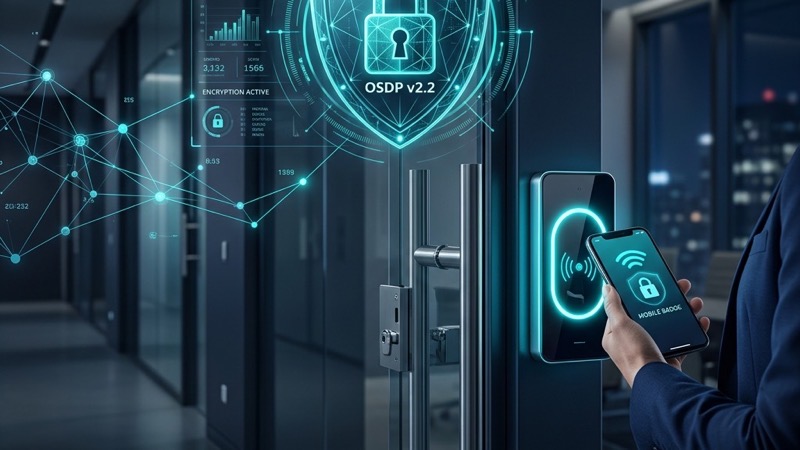
The traditional view of physical security as a “sunk cost” or a passive insurance policy is rapidly becoming obsolete. In the current risk environment, legacy access control systems are no longer just aging infrastructure; they are active security liabilities that expose organizations to sophisticated cyber-physical attacks. For stakeholders in IT and security management, building the business case for a security system upgrade requires a fundamental shift in perspective—moving from basic perimeter protection toward high-assurance data integrity and operational intelligence.
This transition is driven by the “Wiegand Sunset,” the rise of encrypted protocols like OSDP v2.2, and the urgent need for NDAA Section 889 compliance. Modern upgrades allow organizations to move away from restrictive, proprietary “vendor lock-in” toward open-platform architectures that leverage Edge AI and hybrid cloud models. By quantifying the Total Cost of Ownership (TCO) and demonstrating how security data can optimize real estate and HVAC footprints, security professionals can present a compelling financial and operational narrative to the C-suite.
What is a Security System Upgrade?
A security system upgrade is the process of modernizing physical security infrastructure—including access control, video surveillance, and sensors—to meet current cybersecurity standards. This typically involves migrating from unencrypted legacy protocols (like Wiegand) to secure standards (like OSDP v2.2) and integrating AI-driven analytics to improve both safety and operational efficiency.
Identifying the Hidden Vulnerabilities of Legacy Access Control Systems
Modern security upgrades are no longer optional because legacy Wiegand protocols and non-NDAA-compliant hardware represent active, exploitable liabilities rather than passive infrastructure. If your facility still relies on hardware manufactured over a decade ago, you are likely operating with a “silent” security gap that can be exploited with tools available for less than $50 online.
The Wiegand Vulnerability: Why Your Current Readers Are “Silent” Security Gaps
For decades, the Wiegand protocol has served as the industry standard for communication between badge readers and door controllers. However, Wiegand is inherently unencrypted and non-supervised. This means that “man-in-the-middle” attacks are trivial to execute. An attacker can install a small, inexpensive sniffing device behind a reader to capture credential data in plain text.
Because the protocol lacks bi-directional communication, the controller has no way of knowing if the reader has been tampered with or if the data stream is being intercepted. This vulnerability makes “credential cloning” a constant threat, rendering even the most expensive physical badges useless if the underlying communication protocol is compromised.
Navigating the Legal and Compliance Risks of NDAA Section 889
Beyond technical vulnerabilities, there are significant legal risks associated with legacy hardware. NDAA Section 889 is a federal regulation that prohibits the use of specific Chinese-manufactured telecommunications and video surveillance equipment (such as Hikvision and Dahua).
For any firm with federal contracts—or those that serve as subcontractors—non-compliance is a deal-breaker. A business case for an upgrade must highlight that maintaining non-compliant hardware is not just a security risk, but a threat to the organization’s ability to bid on and maintain lucrative government and enterprise contracts. Transitioning to TAA Compliant (Trade Agreements Act) hardware is now a baseline requirement for enterprise resilience.
The Technical Shift: Transitioning to OSDP v2.2 and Edge-to-Cloud Architectures
Moving to OSDP and hybrid cloud models eliminates the “man-in-the-middle” threat while reducing the total cost of ownership through centralized management and PoE++ efficiency. The technical foundation of a modern system relies on two pillars: encryption and flexible architecture.
Encryption at the Edge: Implementing OSDP v2.2 for AES-128 Security
The SIA (Security Industry Association) developed the Open Supervised Device Protocol (OSDP) to replace Wiegand. The current gold standard, OSDP v2.2, utilizes AES-128 encryption to secure the communication between the reader and the controller.
Unlike its predecessor, OSDP supports bi-directional communication. This allows the system to monitor the “health” of the reader in real-time, detect tampering immediately, and even push firmware updates to the readers remotely. This reduces the need for manual “truck rolls” to fix peripheral issues, significantly lowering long-term maintenance costs.
Hybrid Cloud vs. On-Premise: Balancing Latency and Scalability
Many organizations are hesitant to move entirely to the cloud due to concerns over video bandwidth and latency. The industry is moving toward Edge-to-Cloud Hybrid Architectures. In this model, high-bandwidth video data is stored locally to avoid taxing the corporate network, while the management plane—the “brains” of the system—resides in an ACaaS (Access Control as a Service) environment.
This hybrid approach allows for centralized management across multiple global sites without the CAPEX required for on-site servers at every location. When evaluating cloud providers, ensuring SOC 2 Type II compliance is essential to satisfy IT departments that customer data is being managed according to rigorous security standards.
Comparison: Wiegand vs. OSDP v2.2
| Feature | Legacy Wiegand | OSDP v2.2 (Modern Standard) |
|---|---|---|
| Encryption | None (Plain Text) | AES-128 Bit Encryption |
| Communication | Unidirectional (Reader to Controller) | Bi-directional (Supervised) |
| Tamper Detection | Limited/Analog | Real-time Digital Alerts |
| Cabling Requirements | 5-6 Wires (Short Distances) | 2 Wires (RS-485, Long Distances) |
| Remote Management | Not Possible | Firmware Updates & Config via Software |
| Cybersecurity | High Risk of Sniffing | High Assurance / Cyber-Hardened |
Quantifying the ROI of AI-Driven Security and Mobile Credentialing
A successful business case must pivot from “security as insurance” to “security as operational intelligence,” leveraging Edge AI and mobile credentials to drive measurable efficiency gains. When security systems provide data that other departments (HR, Facilities, Real Estate) can use, the budget for the upgrade often becomes a shared responsibility rather than a single-department burden.
Beyond Surveillance: Using Edge AI for Occupancy Analytics and Real Estate Optimization
Modern cameras are no longer just recording devices; they are sophisticated sensors. By utilizing Edge AI, these systems can provide occupancy analytics and heat mapping.
For example, facilities managers can use this data to identify underutilized office zones. If the security system reports that the third floor is consistently at 10% capacity, the organization can optimize HVAC usage or even reduce its real estate footprint. Furthermore, AI-driven “tailgating” detection can identify when multiple people enter a door on a single credential swipe, providing a concrete metric for security awareness training that was previously impossible to track.
The Mobile Shift: Eliminating the Recurring Costs of Physical Plastic Badges
The transition from physical plastic cards to NFC and BLE (Bluetooth Low Energy) mobile credentials via Apple Wallet or Google Pay offers a rapid ROI.
* Reduced Friction: Onboarding a new employee can be done remotely by sending a digital key to their smartphone.
* Cost Savings: The recurring cost of replacing lost or damaged physical badges is eliminated.
* Security: Users are far less likely to “lend” their smartphone to a colleague than they are a plastic badge, and biometric locks on phones add a second layer of authentication (MFA).
Challenging the “Rip and Replace” Myth: A Modular Upgrade Strategy
The most cost-effective upgrade strategy avoids the total replacement of existing infrastructure by utilizing open-platform controllers and software-defined integration layers to bridge legacy and modern systems. Most organizations cannot afford to shut down their security operations for a complete overhaul.
Leveraging Existing Cabling with PoE++ and High-Power Multi-Sensor Units
One of the highest costs in any security upgrade is the labor involved in pulling new cable. By utilizing PoE++ (802.3bt), which provides up to 90W of power over existing Ethernet lines, organizations can deploy high-torque PTZ (Pan-Tilt-Zoom) cameras and multi-sensor units without the need for new electrical runs. This allows for more coverage with fewer devices, maximizing the utility of the existing network infrastructure.
Software-First Integration: How UAB Midpoint Systems Bridges Legacy Hardware
A domain expert prioritizes “open” systems over proprietary ones. Solutions like those provided by UAB Midpoint Systems (CredoID) focus on an open-architecture approach. Instead of forcing a “lock-in” to a specific hardware brand, UAB Midpoint Systems allows for the management of disparate hardware through a unified interface.
This software-first approach means you can keep your existing door strikes and wiring while upgrading the controllers and readers to OSDP-compliant models. By supporting standards like ONVIF Profile M for metadata and OSDP for access control, UAB Midpoint Systems ensures that the new management layer can “speak” to both legacy components and future AI-driven sensors, effectively future-proofing the investment.
Executing the Transition: A Roadmap for Phased Implementation and Future-Proofing
Long-term security resilience is achieved through a phased migration that prioritizes high-risk zones first while ensuring all new hardware supports future-proof standards. A “big bang” approach is rarely successful in enterprise environments; a phased roadmap is more sustainable and less disruptive.
Step 1: Conduct a Cyber-Physical Audit
Begin by identifying every non-NDAA-compliant device and every reader still using Wiegand. Map these against your facility’s high-risk entry points (e.g., server rooms, executive offices, main lobbies).
Step 2: Prioritize High-Risk OSDP Conversion
You do not need to replace every reader on day one. Focus the initial phase of the upgrade on external perimeters and sensitive internal zones. Transition these to OSDP v2.2 readers to eliminate the most immediate sniffing threats.
Step 3: Implement a Unified Management Layer
Deploy a unified software platform, such as CredoID from UAB Midpoint Systems, to gain a single pane of glass for both your legacy hardware and your new encrypted devices. This reduces training time for security personnel and ensures that event logs are centralized for audit purposes.
Step 4: Pilot Mobile Credentialing and Edge AI
Select a specific department or building to pilot mobile credentials and AI-driven occupancy analytics. Collect data for 90 days to demonstrate the ROI in terms of “lost badge” cost reduction and HVAC optimization.
Step 5: Scale via Subscription or HaaS
To manage CAPEX, consider moving toward Hardware-as-a-Service (HaaS) models. This allows for continuous hardware refreshes and software updates without the need for large, infrequent capital outlays, shifting the security budget to a predictable OPEX model.
Next Steps: Securing Your Infrastructure
Building the business case for a security system upgrade is about more than just buying new hardware; it is about creating a resilient, data-rich environment that protects both people and assets. By focusing on encryption, open standards, and operational ROI, you can transform your security system from a cost center into a strategic asset.
To see how a unified, open-architecture approach can streamline your migration and eliminate vendor lock-in, Get Demo of the CredoID platform today.